
Norfolk County Traffic Warrants Explained
Massachusetts has no county traffic court. A ticket written by a municipal officer lands in the District Court division serving that town, and the clerk there controls the file. That is where a Norfolk County traffic warrant begins. It shows up when a civil motor vehicle citation goes unpaid or uncontested past the deadline, or when a driver skips a summons date. The Trial Court's civil motor vehicle rules lay out the path: an arrest warrant may issue after a failure to pay or respond, and again after a failure to appear once service is proven. So the division, not a police traffic bureau, holds the answer. Call the clerk of the division that covers the town on your ticket, and ask directly whether a warrant has issued in your name.
Norfolk County Warrant Cases in District Court
The town on the citation picks the courthouse. Quincy District Court takes Braintree, Cohasset, Holbrook, Milton, Quincy, Randolph, and Weymouth, which makes it the busiest traffic division in Norfolk County. Dedham handles Dedham, Dover, Medfield, Needham, Norwood, Wellesley, and Westwood. Stoughton takes Avon, Canton, Sharon, and Stoughton. Wrentham covers Foxborough, Franklin, Medway, Millis, Norfolk, Plainville, Walpole, and Wrentham. Brookline stands alone. This geographic split explains most failed ticket searches in Norfolk County. A Braintree citation belongs in Quincy, and a Walpole citation belongs in Wrentham, no matter where the driver lives today. Search the division that matches the ticket, not your own address.
Checking for a Traffic Warrant
Two numbers matter here. Most drivers have only the citation number, and public court access accepts it on its own tab. Once a ticket becomes a court case, the case number works too.
| Field | Type | Required | Notes |
|---|---|---|---|
| Court Department | Dropdown | Yes | Select District Court for a Norfolk County traffic matter. |
| Court Division | Dropdown | Yes | Brookline, Dedham, Quincy, Stoughton, or Wrentham. |
| Court Location | Dropdown | Varies | Confirm from the citation or case paperwork. |
| Ticket or Citation Number | Exact text | Yes, on that tab | Enter it as printed, keeping punctuation and leading zeros. |
| Case Number | Exact text | Alternative | Use it when the citation has become a court case. |
| Date Range and Case Type | Dates and selection | Case-type tab only | The range cannot exceed one month and is not a substitute for a citation lookup. |
Norfolk County Traffic Warrant Citation Search
The citation number tab is what makes a Norfolk County traffic warrant search different. Officers hand you a ticket, not a docket number, so the search has to work from that. Copy the number exactly as printed. The state's instructions stress capitalization, spacing, and leading zeros, because a truncated number returns nothing.
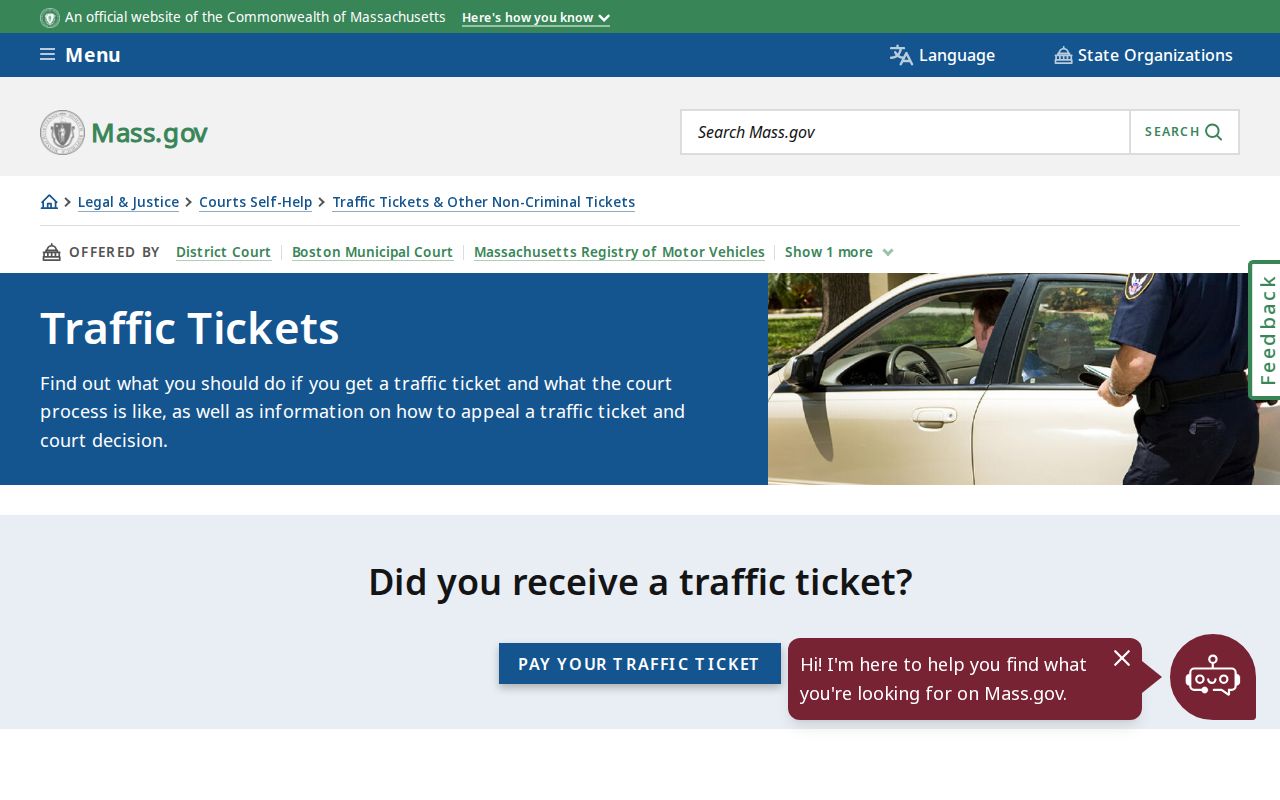
Call the clerk if the citation does not appear at all. A ticket only a few days old may not have reached the system yet. And if the matter turned criminal, you may need the case number instead.
Inside a Traffic Warrant Record
A traffic file is short, and in Norfolk County the citation number ties every page of it together.
| Citation Number | The number printed on the officer's citation, for example a number in the style T1234567 that must be entered exactly. |
|---|---|
| Violation and Statute | The civil motor vehicle infraction or criminal charge named on the citation. |
| Issuing Court | The District Court division that holds the citation and any default. |
| Filing Date and Status | When the citation reached the court, and whether it is pending, defaulted, or resolved. |
| Amount or Assessment | The fine, any default assessment, and any fee the court adds. |
This is not a driving record. A Norfolk County court file will not show points or insurance consequences. It answers one question: does a court hold an unresolved traffic matter in your name?
Norfolk County Traffic Warrants Versus Infractions
Massachusetts treats most traffic violations as civil motor vehicle infractions, with their own payment and appeal steps. A citation can also be written as a criminal complaint, and the court's notice will say so. The difference is real. It decides whether paying closes the matter or whether you must appear.
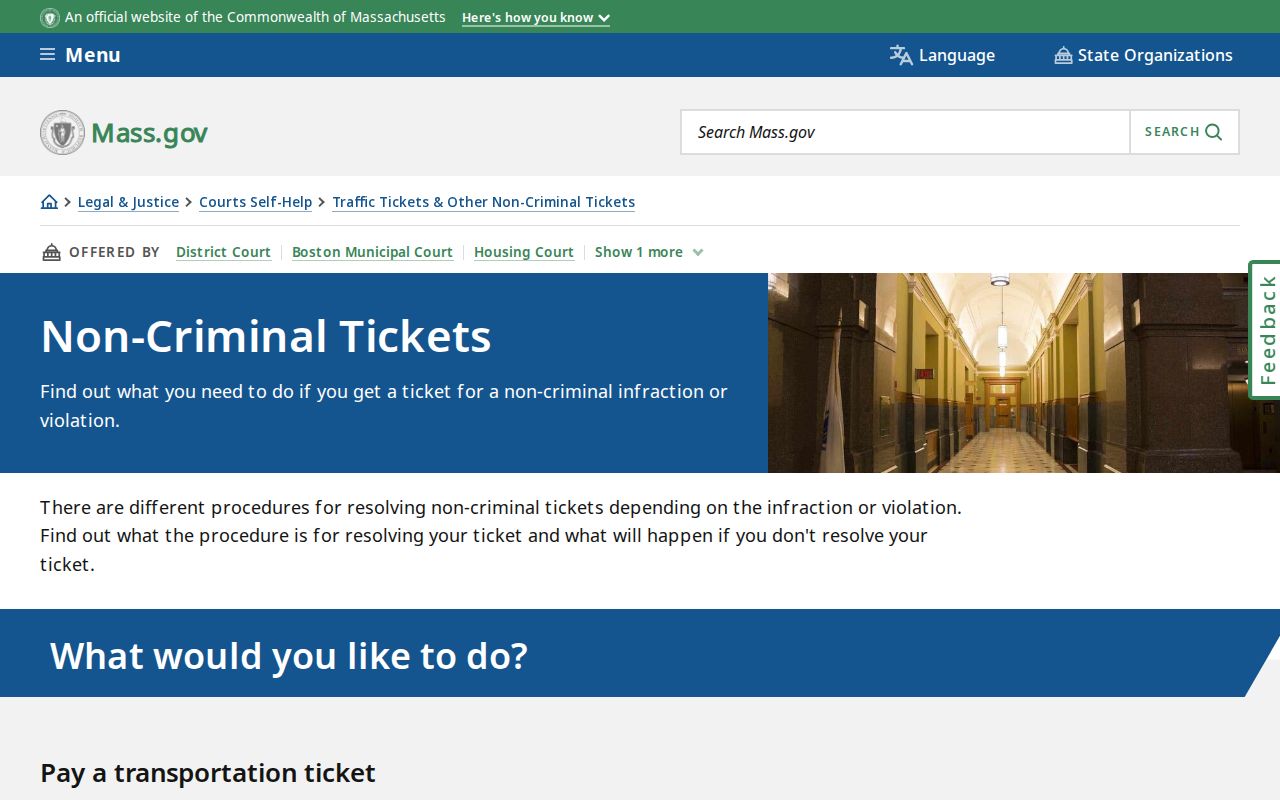
If the notice is unclear, ask the clerk directly. Find out whether your case is a civil infraction, a criminal citation, or a payment-only default. Guess wrong either way and a payable ticket can turn into a Norfolk County warrant.
How to Pay or Lift a Traffic Warrant
Payment alone does not lift a Norfolk County warrant. The court must confirm the payment discharges the default, so work through the clerk before sending money anywhere.
- Call the issuing District Court clerk and ask what the outstanding balance includes, and whether a court appearance is also required.
- Ask whether the matter qualifies as a payment-only default under the state statute.
- Pay only through an approved method. The court's electronic payment system handles some fees, but the clerk decides whether your default is discharged.
- Keep the receipt and ask when the discharge will be entered and the warrant recalled.
- Request written confirmation, and follow up if nothing arrives within about a week.
Caution: A Norfolk County traffic warrant stays active until the court recalls it or discharges the default. A payment receipt alone is not proof of recall.
Norfolk County Traffic Warrant Payment Defaults
When a default warrant exists only because money went unpaid, the statute lets the court accept payment by mail, telephone, or another approved electronic method. The warrant should list the amount owed plus a $50 assessment. The court can waive that $50 for good cause or substantial hardship. After payment, the court enters a discharge. Notice should go out within seven days. Confirm the discharge reached the warrant system yourself. Do not assume a payment-only discharge resolves anything else, including a separate criminal case or another court's warrant. Note: A recall fee of $50 may also apply when a Norfolk County default is removed after a missed court date.
Traffic Warrants, FTA, and License Holds
People confuse three things: a failure to appear, a default warrant, and a license consequence. Each is a separate step. Only one of them is the warrant itself.
| Stage | What Happens | Where It Is Handled |
|---|---|---|
| Failure to respond | The citation is not paid or contested within the time allowed | The District Court that holds the citation |
| Failure to appear | The driver misses a scheduled court date on the citation | The same District Court, which may record a default |
| Default warrant | The court issues process after the default | The issuing court, which controls recall |
| License notice | A warrant match can lead to license action after notice and a hearing opportunity | The licensing authority, acting on warrant data |
A license notice is a consequence of the unresolved warrant, not a second ticket. Clear the Norfolk County court matter first, and the license question can then be addressed.
Norfolk County Traffic Warrant Scams
Scammers work this territory hard. The state's traffic page carries a Registry of Motor Vehicles warning, and the Sheriff's Office issued its own alerts in 2025 about callers claiming a warrant or missed jury date required immediate payment. Real agencies never demand gift cards, cryptocurrency, or wire transfers. A true Norfolk County warrant question goes to the clerk, not to a caller.
- End the call without confirming personal details.
- Do not pay by cryptocurrency, gift card, prepaid card, or wire transfer.
- Call the District Court clerk using a number from an official page.
- Report the call to your local police department.